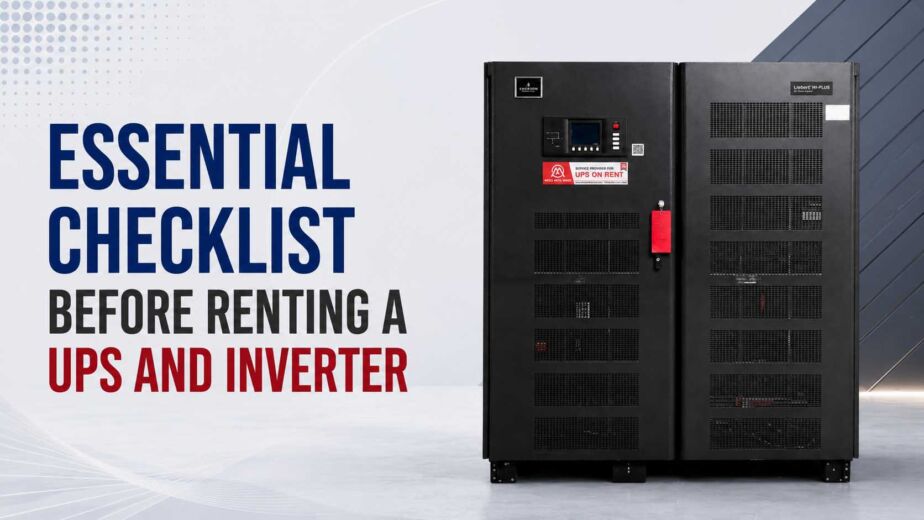
Reliable electricity is essential for modern manufacturing. From production lines and CNC machines to automated equipment, industrial control systems, and quality testing units, many factory operations depend on a continuous power supply.
A sudden power interruption can stop production, interrupt automated processes, affect product quality, and delay deliveries. For factories operating on tight schedules, even a short outage can create operational challenges and financial losses.
This is why businesses should plan a reliable power backup system that suits their machinery, production requirements, and operating hours.
Mukul Metal Works provides UPS rental solutions for industrial and commercial applications, helping businesses plan backup power for critical equipment and essential operations.
In this guide, we explore power backup requirements for factories in four important industrial belts of Haryana: Manesar, Bahadurgarh, Kundli, and Panipat.
Why Do Factories Need Reliable Power Backup?
Industrial facilities use a wide range of electrical equipment, and the impact of a power failure depends on the manufacturing process.
A dependable backup arrangement can help businesses manage power interruptions affecting:
- CNC machines and precision manufacturing equipment
- PLCs, industrial automation, and control panels
- Production monitoring systems and industrial computers
- Quality testing and measurement equipment
- Server rooms, networking, and communication systems
- Packaging, labelling, and process control equipment
- Essential lighting, safety systems, and monitoring devices
Not every machine needs to run on a UPS. In many factories, the priority is to keep control systems operational, prevent data loss, maintain critical electronics, and allow machinery to shut down safely.
The right solution depends on the equipment, the production process, and the required backup duration.
Industrial Power Backup Requirements Across Haryana
- Manesar: Automotive and Engineering Manufacturing
Manesar is an important industrial destination in Haryana, with automotive suppliers, engineering companies, component manufacturers, and other industrial businesses.
Factories in this area may use automated assembly lines, CNC equipment, robotics, inspection systems, and computer-controlled production processes.
Power backup priorities for Manesar factories:
- Maintaining power to PLCs and industrial control systems
- Protecting computers and production monitoring systems
- Supporting essential automation and communication equipment
- Reducing disruption during a controlled shutdown
- Coordinating UPS backup with the factory’s generator and electrical distribution
For automotive and precision engineering facilities, backup planning should consider the consequences of an unexpected machine stoppage, including restart procedures and production material already in process.
- Bahadurgarh: Manufacturing and Industrial Production
Bahadurgarh has manufacturing and industrial activity across several sectors, including packaging, footwear, engineering, and consumer goods.
Depending on the facility, power interruptions can affect automated production equipment, printing systems, packaging lines, quality checks, and warehouse operations.
Power backup priorities for Bahadurgarh factories:
- Protecting production control panels and automation systems
- Keeping essential IT and networking equipment operational
- Supporting critical printing and packaging controls
- Reducing disruption to quality testing and inspection equipment
- Planning suitable backup for essential production support systems
A load assessment helps determine whether the factory needs a small dedicated UPS for control systems or a larger industrial configuration for multiple critical loads.
- Kundli: Industrial Manufacturing and Warehousing
Kundli, in the Sonipat industrial region, is home to manufacturing units, warehouses, logistics operations, and businesses supplying the wider Delhi NCR market.
For facilities that depend on inventory management, automated equipment, production monitoring, and dispatch coordination, a power interruption can affect both operations and delivery schedules.
Power backup priorities for Kundli factories:
- Supporting warehouse management and inventory systems
- Maintaining server, network, and communication equipment
- Protecting industrial automation and control electronics
- Supporting essential packaging and dispatch systems
- Ensuring safe shutdown of sensitive equipment
For warehouses and distribution centres, UPS backup may be particularly useful for IT infrastructure, network devices, security systems, and selected automation equipment.
- Panipat: Textile and Process Manufacturing
Panipat is known for its textile, home furnishing, and other manufacturing activities. Depending on the facility, production can involve spinning, weaving, processing, finishing, packaging, and supporting control systems.
An unexpected power interruption may affect machine controls, process monitoring, production data, and the coordination of multiple manufacturing stages.
Power backup priorities for Panipat factories:
- Protecting electronic controls and monitoring systems
- Supporting quality testing and production computers
- Maintaining communication between essential systems
- Providing time for safe shutdown of sensitive equipment
- Coordinating UPS backup with generator and plant power systems
Where production includes heavy motors, heating systems, or other high-power equipment, a separate assessment is necessary before deciding which loads should receive UPS support.
How Much UPS Capacity Does a Factory Need?
There is no single UPS capacity suitable for every factory. The required capacity depends on the total connected load, equipment characteristics, power factor, startup demand, and the required backup duration.
The following ranges are illustrative starting points for discussing critical UPS loads, not recommended capacities for entire factories.
| Industrial application | Indicative UPS capacity to assess |
| Small control room and essential IT equipment | 5–10 kVA |
| PLCs, automation controls, and monitoring systems | 10–30 kVA |
| Multiple production control systems | 30–100 kVA |
| Large industrial critical-load installation | 100 kVA and above |
Actual requirements may fall outside these ranges. Heavy machinery, motors, and complete production lines can require significantly different configurations.
Before selecting a UPS, identify the equipment that must remain operational, calculate the load in both kW and kVA, and confirm the manufacturer’s requirements for overload capacity and runtime.
UPS vs Generator: What Should a Factory Choose?
For many industrial facilities, a UPS and a generator serve different purposes.
| Requirement | UPS | Generator |
| Immediate backup during a power interruption | Yes, within its rated limits | Depends on startup and changeover |
| Support for sensitive electronic equipment | Commonly suitable | May require a UPS for uninterrupted operation |
| Extended backup during a long outage | Limited by battery capacity | Suitable when correctly sized and fuel is available |
| Industrial motors and heavy machinery | Requires careful engineering and load assessment | Often used for larger power loads |
| Safe shutdown of critical systems | Can provide a bridge during an interruption | Can support longer operation after changeover |
A UPS can provide immediate power to selected critical loads while a generator starts or the main supply is restored. However, the arrangement must be designed for the actual electrical system.
Factories should also assess voltage fluctuations, harmonics, earthing, protection systems, and the compatibility of the UPS with generators and sensitive machinery.
How to Select the Right UPS for Your Factory
Follow these steps before arranging an industrial UPS rental.
Step 1: Identify critical equipment
Prepare a list of the systems that cannot tolerate an unexpected interruption. These may include PLCs, control panels, industrial computers, servers, communication equipment, and selected precision instruments.
Step 2: Calculate the electrical load
Record the rated power of every device that needs backup. Calculate the total load and account for power factor, peak demand, and startup characteristics.
Do not select a UPS using wattage alone. Both the UPS’s kW and kVA ratings must be sufficient.
Step 3: Decide the required backup duration
Determine whether the UPS must provide a few minutes of backup for generator changeover, enough time for an orderly shutdown, or longer operation.
Battery sizing should be based on the actual load and the manufacturer’s runtime data.
Step 4: Consider the factory environment
Industrial environments may involve dust, heat, vibration, and restricted installation space. Choose equipment and an installation location appropriate for the operating conditions.
Step 5: Plan installation and testing
Coordinate with the factory’s electrical team to verify cable sizing, protection, earthing, distribution, ventilation, and maintenance access.
Test the complete arrangement before relying on it during production.
Step 6: Evaluate rental versus purchase
If backup equipment is needed for a temporary production requirement, a maintenance shutdown, equipment installation, or a short-term capacity increase, rental may be worth considering.
Compare the rental duration, installation requirements, service arrangements, and total cost with the purchase option before making a decision.
Why Choose UPS Rental for Industrial Applications?
Industrial UPS rental can help businesses arrange temporary backup capacity without making an immediate investment in permanent equipment.
It may be useful for:
- Temporary manufacturing facilities
- Planned electrical maintenance
- Machinery installation and commissioning
- Production expansion and additional equipment
- Critical IT and automation support
- Temporary industrial projects and testing
The appropriate rental configuration depends on the equipment available, the required capacity, installation conditions, and the duration of the requirement.
UPS Rental for Factories in Manesar, Bahadurgarh, Kundli and Panipat
Mukul Metal Works offers UPS rental solutions for industrial and commercial applications where dependable power backup is required.
We can help businesses discuss their critical-load requirements, capacity options, and backup duration for suitable industrial applications.
Whether your facility operates in Manesar, Bahadurgarh, Kundli, Panipat, or another industrial area in Haryana, the first step is to understand which equipment needs uninterrupted power and how the backup system will work with the existing electrical infrastructure.
For larger installations, the final solution should be based on a site assessment and coordination with qualified electrical professionals.
Frequently Asked Questions
- Which UPS is suitable for a manufacturing plant?
The suitable UPS depends on the critical load, operating environment, backup duration, and equipment requirements. Online UPS systems are commonly considered for sensitive electronic and control loads, but the final selection should follow a technical assessment.
- Can a UPS run heavy industrial machinery?
Some appropriately engineered UPS systems can support selected industrial loads. However, motors, compressors, and heavy production machinery can have high starting currents and special electrical requirements. A standard UPS should not be assumed suitable without a detailed load assessment.
- Is UPS rental available for temporary factory requirements?
UPS rental may be suitable for temporary production facilities, maintenance work, commissioning, and other short-term industrial applications, subject to equipment availability and site requirements.
- How long can an industrial UPS provide backup?
Backup duration depends on the UPS configuration, battery capacity, battery condition, and connected load. The required runtime should be confirmed using manufacturer data and the actual operating load.
- Can a UPS work with an existing factory generator?
Yes, if the systems are properly selected and integrated. Compatibility, voltage and frequency stability, changeover arrangements, earthing, and protection must be verified by qualified professionals.
Conclusion
Reliable power backup is an important part of industrial continuity planning. Factories in Manesar, Bahadurgarh, Kundli, and Panipat can reduce the risk of avoidable production interruptions by identifying critical loads and selecting an appropriate UPS and generator arrangement.
The best solution is not necessarily the largest UPS. It is the system that supports the right equipment, provides the required backup duration, and integrates safely with the factory’s existing electrical infrastructure.
Contact Mukul Metal Works to discuss UPS rental requirements for industrial applications across Haryana and Delhi NCR.