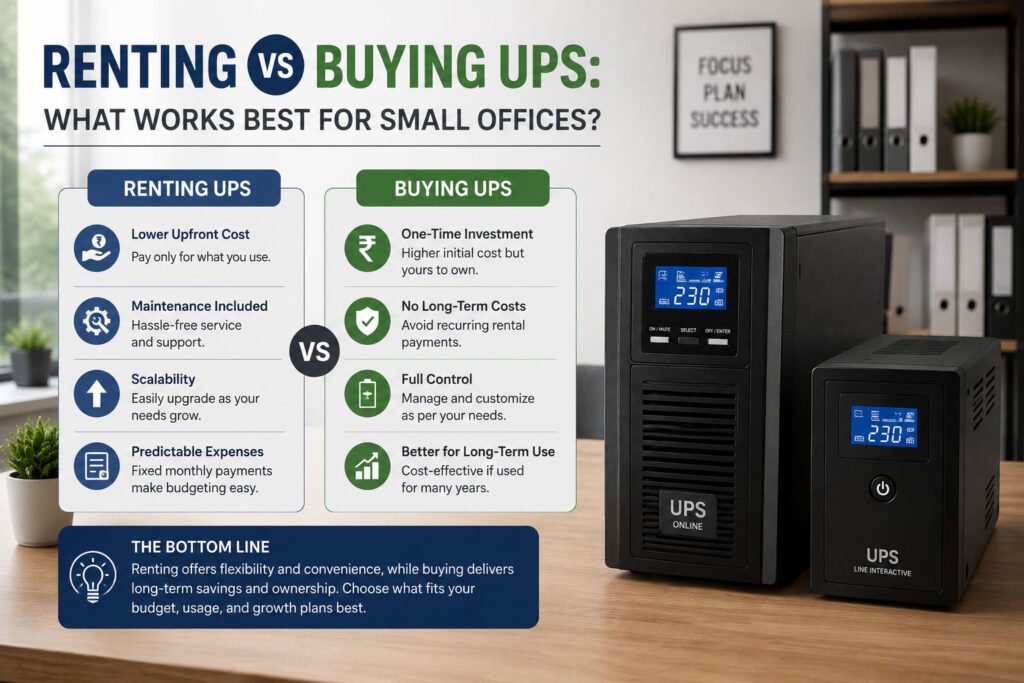
Renting vs Buying UPS: What Works Best for Small Offices?
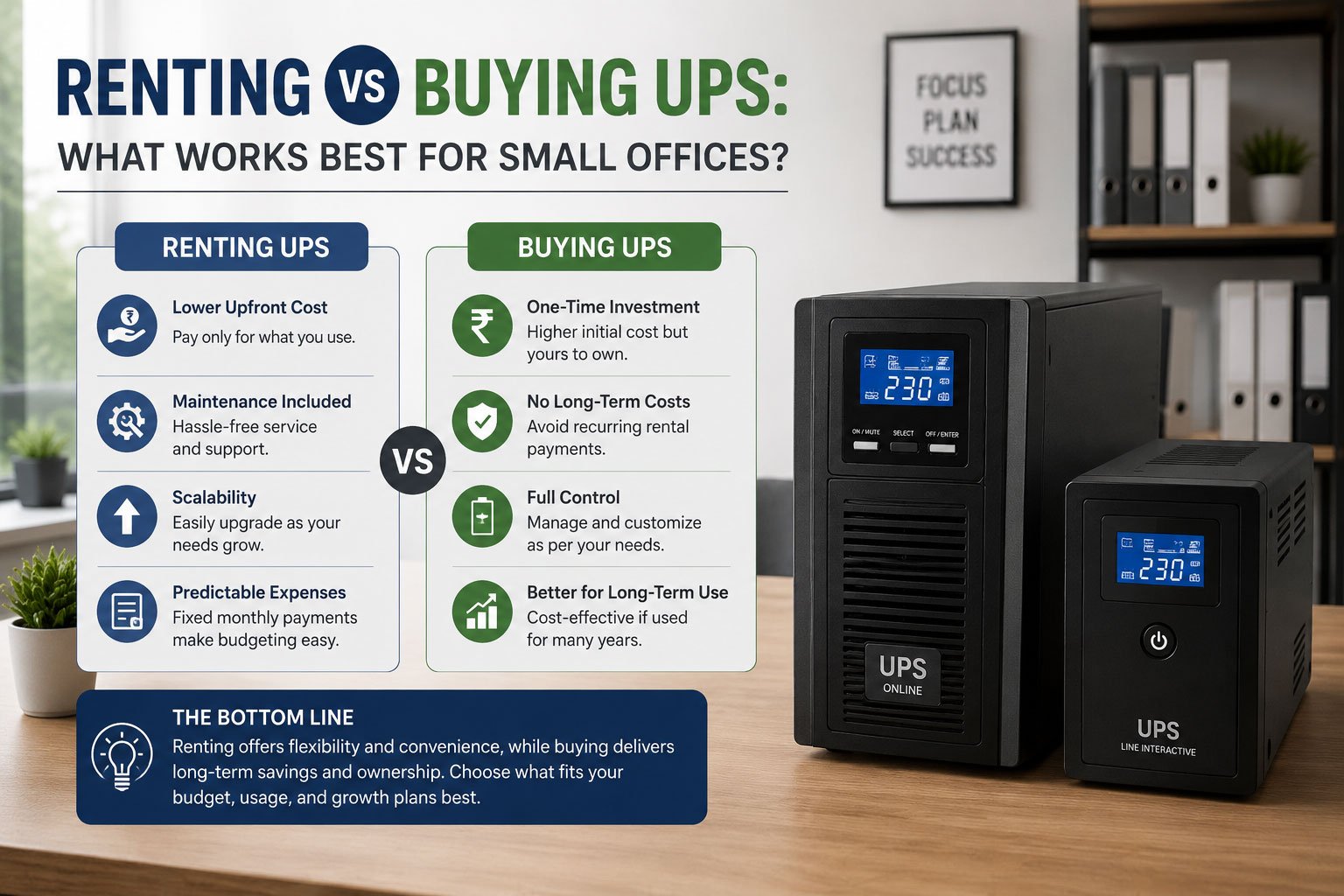
For small offices, startups, and service-based businesses, uninterrupted power is essential to keep operations running smoothly. From computers and Wi-Fi to billing systems and servers, even a short outage can disrupt workflow and productivity.
The big question is: Should you rent a UPS or buy one?
Let’s break it down so you can choose what truly works best for your office.
🔌 Understanding Your Power Needs
Before deciding, consider what your office actually requires:
- Number of devices (PCs, routers, printers, etc.)
- Total power load (kVA/kW)
- Backup duration needed
- Frequency of power cuts in your area
For most small offices, systems in the 2 kVA to 6 kVA range are sufficient.
⚙️ Buying a UPS: Pros & Cons
✅ Advantages of Buying
- One-Time Investment
You pay once and own the equipment. - Long-Term Use
Suitable for businesses with stable, long-term office setups. - Full Control
You manage usage, upgrades, and maintenance schedules.
❌ Disadvantages of Buying
- High Upfront Cost
Initial investment can be significant for small businesses. - Maintenance Responsibility
Battery replacement, servicing, and repairs are your responsibility. - Technology Obsolescence
UPS systems may become outdated over time. - Limited Flexibility
Scaling up requires additional investment.
🔄 Renting a UPS: Pros & Cons
✅ Advantages of Renting
- Low Initial Cost
No heavy upfront investment—ideal for startups and small offices. - Maintenance-Free
Service, repairs, and support are handled by the provider. - Flexible Plans
Upgrade, downgrade, or cancel as per your needs. - Latest Technology Access
Always get modern and efficient systems. - Quick Setup
Fast installation, especially useful for urgent requirements.
❌ Disadvantages of Renting
- Recurring Cost
Monthly rental fees over a long period may add up. - No Ownership
You don’t own the equipment.
💰 Cost Comparison
Buying:
- Initial Cost: ₹25,000 – ₹80,000 (depending on capacity)
- Battery Replacement: Every 2–3 years
- Maintenance Cost: Additional
Renting:
- Monthly Cost: ₹2,000 – ₹8,000
- Maintenance: Included
- Flexibility: High
👉 For short-term or uncertain needs, renting is more economical.
🏢 What Works Best for Small Offices?
✔️ Choose Renting If:
- You are a startup or growing business
- You want to avoid upfront investment
- Your office setup may change
- You need temporary or backup solutions
- You prefer hassle-free maintenance
✔️ Choose Buying If:
- You have a stable, long-term office
- Budget is not a constraint
- You can manage maintenance
- Your power needs won’t change much
⚠️ Key Factors to Consider
- Budget (short-term vs long-term)
- Business growth plans
- Maintenance capability
- Power reliability in your area
- Scalability needs
🏆 Why Many Small Offices Prefer Renting Today
With rising flexibility needs and cost sensitivity, many small offices now prefer UPS rental because it:
- Reduces financial burden
- Offers scalability
- Eliminates maintenance worries
- Ensures uninterrupted operations
📞 Final Thoughts
Both renting and buying have their place—but for most small offices, renting a UPS offers greater flexibility, lower risk, and better convenience.
If your business is growing or you want a stress-free solution, renting is often the smarter choice. However, if you’re settled and planning long-term use, buying may still be a viable option.
The best choice ultimately depends on your budget, growth plans, and operational needs.