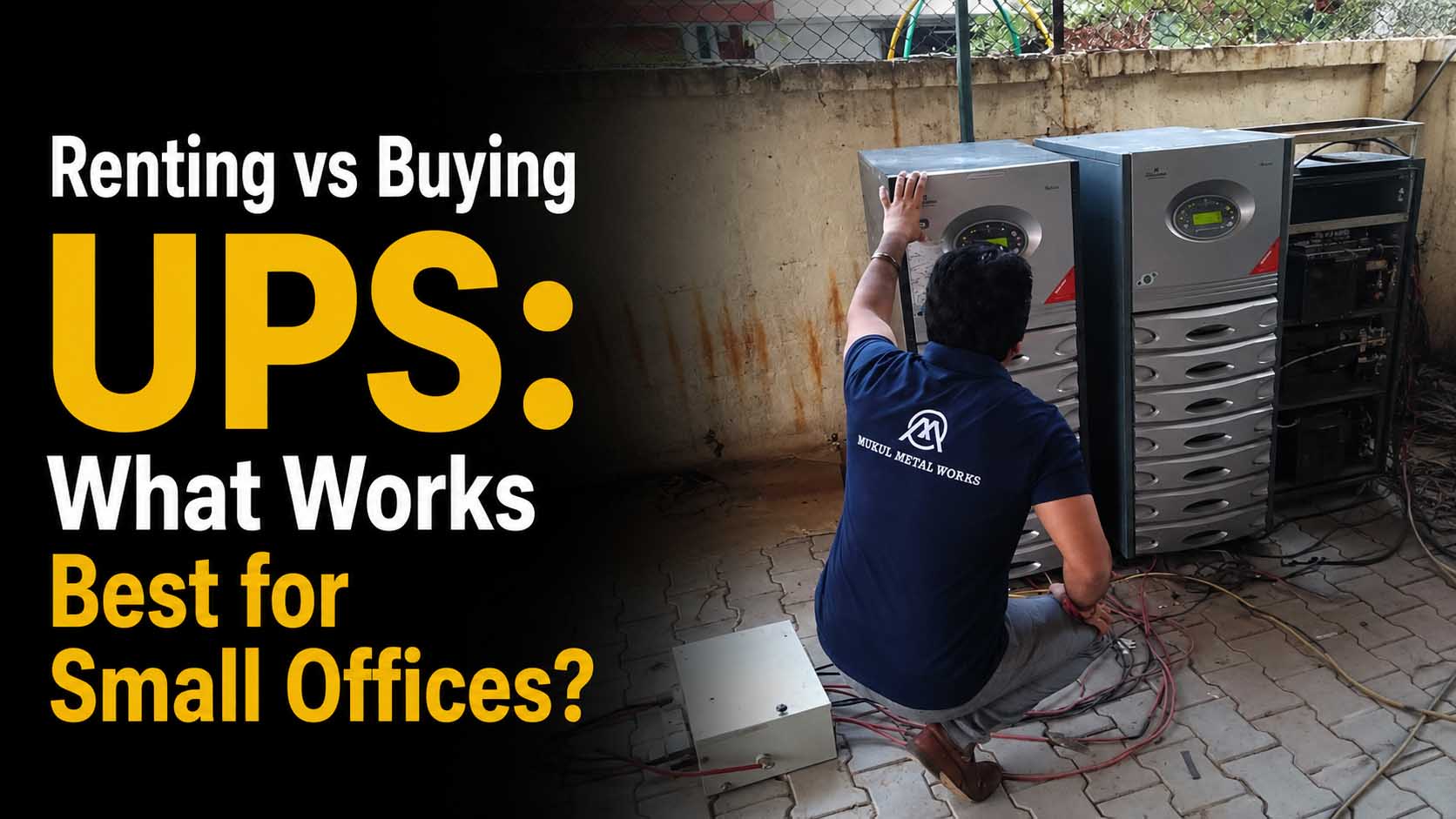
For small offices, startups, and service-based businesses, uninterrupted power is essential to keep operations running smoothly. From computers and Wi-Fi to billing systems and servers, even a short outage can disrupt workflow and productivity.
The big question is: Should you rent a UPS or buy one?
Let’s break it down so you can choose what truly works best for your office.
Understanding Your Power Needs
Before deciding, consider what your office actually requires:
- Number of devices (PCs, routers, printers, etc.)
- Total power load (kVA/kW)
- Backup duration needed
- Frequency of power cuts in your area
For most small offices, systems in the 2 kVA to 6 kVA range are sufficient.
Buying a UPS: Pros & Cons
✅ Advantages of Buying
- One-Time Investment
You pay once and own the equipment. - Long-Term Use
Suitable for businesses with stable, long-term office setups. - Full Control
You manage usage, upgrades, and maintenance schedules.
Disadvantages of Buying
- High Upfront Cost
Initial investment can be significant for small businesses. - Maintenance Responsibility
Battery replacement, servicing, and repairs are your responsibility. - Technology Obsolescence
UPS systems may become outdated over time. - Limited Flexibility
Scaling up requires additional investment.
Renting a UPS: Pros & Cons
✅ Advantages of Renting
- Low Initial Cost
No heavy upfront investment—ideal for startups and small offices. - Maintenance-Free
Service, repairs, and support are handled by the provider. - Flexible Plans
Upgrade, downgrade, or cancel as per your needs. - Latest Technology Access
Always get modern and efficient systems. - Quick Setup
Fast installation, especially useful for urgent requirements.
Disadvantages of Renting
- Recurring Cost
Monthly rental fees over a long period may add up. - No Ownership
You don’t own the equipment.
💰 Cost Comparison
Buying:
- Initial Cost: ₹25,000 – ₹80,000 (depending on capacity)
- Battery Replacement: Every 2–3 years
- Maintenance Cost: Additional
Renting:
- Monthly Cost: ₹2,000 – ₹8,000
- Maintenance: Included
- Flexibility: High
👉 For short-term or uncertain needs, renting is more economical.
What Works Best for Small Offices?
✔️ Choose Renting If:
- You are a startup or growing business
- You want to avoid upfront investment
- Your office setup may change
- You need temporary or backup solutions
- You prefer hassle-free maintenance
✔️ Choose Buying If:
- You have a stable, long-term office
- Budget is not a constraint
- You can manage maintenance
- Your power needs won’t change much
⚠️ Key Factors to Consider
- Budget (short-term vs long-term)
- Business growth plans
- Maintenance capability
- Power reliability in your area
- Scalability needs
Why Many Small Offices Prefer Renting Today
With rising flexibility needs and cost sensitivity, many small offices now prefer UPS rental because it:
- Reduces financial burden
- Offers scalability
- Eliminates maintenance worries
- Ensures uninterrupted operations
Final Thoughts
Both renting and buying have their place—but for most small offices, renting a UPS offers greater flexibility, lower risk, and better convenience.
If your business is growing or you want a stress-free solution, renting is often the smarter choice. However, if you’re settled and planning long-term use, buying may still be a viable option.
The best choice ultimately depends on your budget, growth plans, and operational needs. Mukul Metal Works provides dependable UPS rental service, online UPS rental, and Branded UPS on Lease Delhi .